


Why We’re Obsessed With Dielectric Integrity in Trolley Heaters
In a semiconductor clean room, there’s no such thing as a “small” electrical glitch. Everything is high-stakes. When we build trolley heaters, hitting the right temperature is only half the battle. The real challenge? Making sure the heating elements stay electrically quiet. If you get leakage currents, you aren’t just risking a safety hazard—you’re risking your wafers.
Why we test every single tube
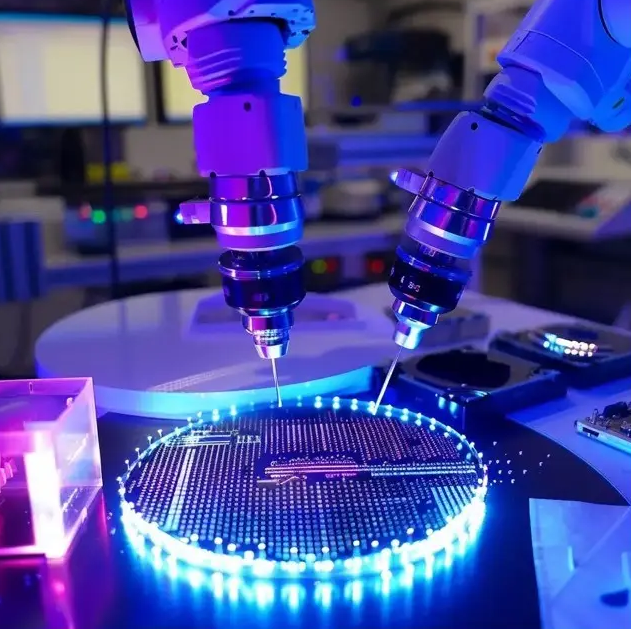
We don’t do “sample checks.” That’s too risky. Instead, every single heating tube goes through a full Hi-Pot (withstand voltage) and insulation resistance test before it even thinks about leaving our floor. Here’s why: a tiny, microscopic crack in the ceramic or one little pinhole in the coating can cause an arc-over. In your world, an electrical arc does more than just pop a fuse. It kicks up particles. And particles are the enemy of silicon. By pushing the insulation to its breaking point during QC, we make sure the heater won’t leak current into your trolley chassis while you’re in the middle of a production run.
The tricky part about materials
There’s always a trade-off. To keep that insulation resistance high, we use high-purity alumina or specialized quartz coatings. They’re great for safety, but they’re brittle. Just a heads-up: be careful during installation. If your team puts too much mechanical stress on the tubes, they can fracture. It would be a shame to create the exact problem our testing worked so hard to prevent.
A few tips for the install
When you’re wiring these up, double-check your grounding. Make sure it’s rock solid. Even with perfect insulation, the sheer heat density can eat away at cable jackets over time. We build these heaters to handle the constant thermal cycling of a clean room, but it’s on you to make sure your trolley’s electrical footprint actually matches the heater’s voltage. If they don’t line up, you’re looking at a premature burn-out.