
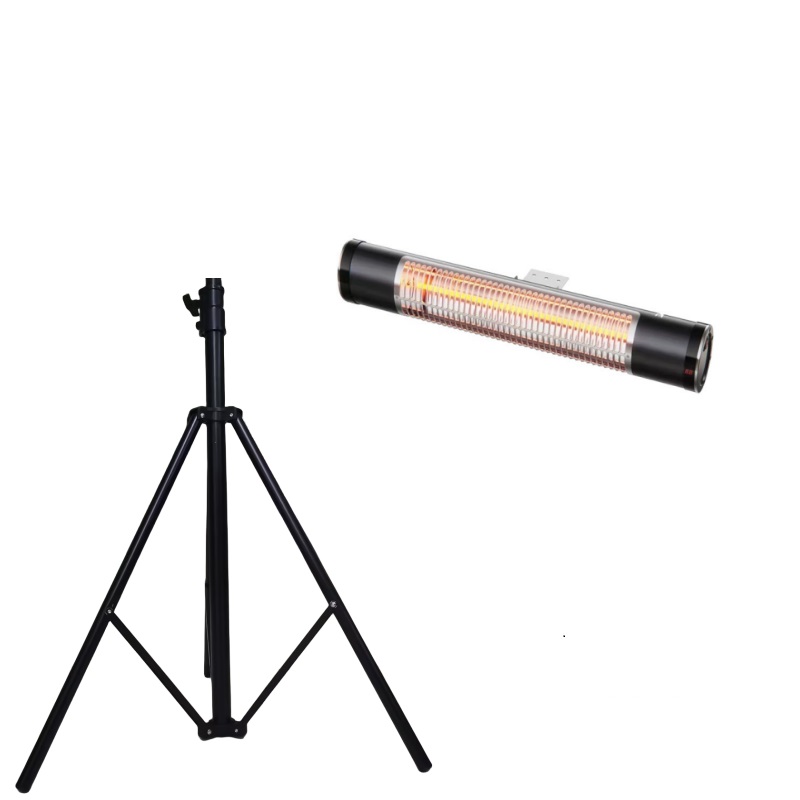
Let’s be honest: installing infrared heaters in a place with high ceilings is a pain. When your units are hanging 10 meters up, you can’t exactly climb a ladder every few months just to swap out a dead element. It’s a waste of time and a safety headache. That’s why we built our high-ceiling series. We wanted something that could actually survive the grime of an industrial floor. Specifically, we focused on the two things that usually kill these heaters: moisture and dust. The problem with fog and splashes Here is how it usually happens. You’ve got a humid warehouse or a spot with a lot of steam, and condensation builds up on the quartz glass. The second the heater kicks in, that moisture flashes into steam. It’s a massive thermal shock. Tiny micro-cracks form in the glass, the vacuum seal pops, and oxygen hits the tungsten filament. Boom. The lamp is gone. To fix this, we added anti-fog coatings and sealed the housings. We basically changed how the glass handles surface tension so water droplets just can’t cling to it. We also made them splash-proof. Why? Because if airborne oils or cleaning chemicals bake onto the emitter, you get a layer of grime that traps the heat inside. The lamp overheats, and you’re back to square one. Keeping the heat, losing the risk We use IP-rated enclosures and reinforced gaskets to keep the electrical guts dry. It stops corrosion from eating away at your contacts, which is a huge win for long-term reliability. Now, there is a trade-off. Adding all that protective shielding can slightly dampen the heat throw. But we found a way around it. We just use higher-wattage elements. You get all the durability of a sealed system, but the heat still hits the floor with plenty of punch. Just a heads-up: since these are beefier and pull a bit more power, double-check your electrical breakers and ceiling supports. They’re designed to be drop-in replacements for open-air units, but the extra weight of the casing means you’ll want to make sure your mounting brackets are solid.