


The Hidden Reason Your Infrared Heaters Actually Die
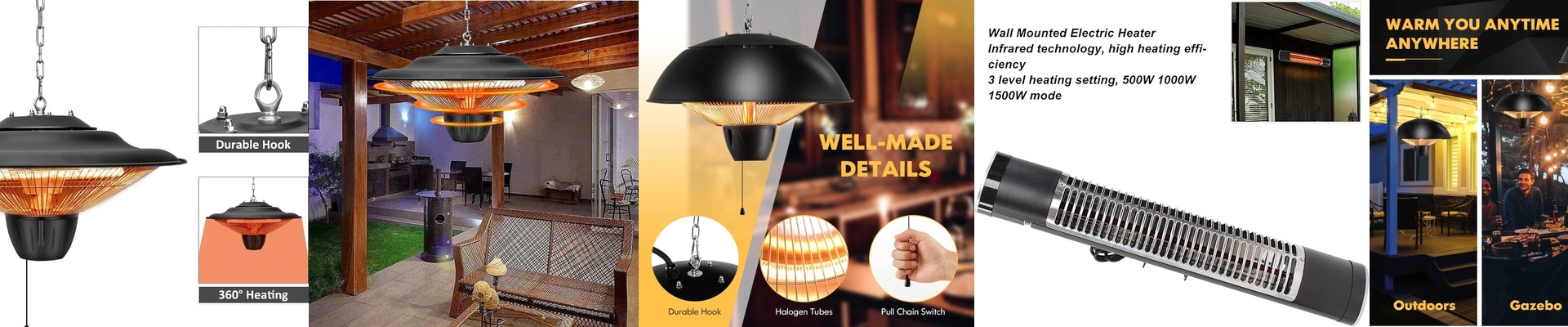
If you’ve ever put a ceiling-mounted infrared heater in a tough environment, you know it’s a brutal place to be. The heat doesn’t just blast downward; a lot of it fights its way back up toward the wiring terminals. Here’s the problem: if the lead-wire sealing isn’t handled right, the insulation basically bakes. It cracks. It flakes. And then it shorts out. Most generic heaters fail exactly like this.
What’s actually happening up there?
Standard wiring just can’t handle that kind of constant thermal hammering. When people talk about “factory-level” sealing, they’re really talking about that tiny spot where the lead wire hits the heating element. On the cheap stuff, this is usually just a basic crimp or some heat-shrink wrap. It looks fine for a week. But over time, the heat sneaks past that seal. It oxidizes the copper and eats away at the polymer. Eventually, the insulation gets so brittle it just falls off. All it takes is one little vibration or a slight shift in the ceiling mount and—pop—you’ve got a dead short.
How we stop the bleed
We don’t use the basic stuff. Instead, we go with high-temp ceramic potting or specialized silicone-glass composites. Think of it as a physical wall that stops heat from migrating. It locks the wire in place and kills the “wicking” effect, which is when heat travels up the conductor and fries the wire jacket from the inside out. You need a seal that can sit at 250°C without flinching. Because the second that seal softens, the wire shifts. And once the wire shifts, you’ve got an arc on your hands.
A quick heads-up on installation
There is one trade-off: better sealing makes the leads stiffer. You can’t bend these wires into sharp angles like you can with cheap PVC cables. If you try to force a tight radius during install, you might actually crack the sealant. **Give the wires some room to breathe.**Use a wider bend radius to keep that internal seal solid. It’s a small detail, but it’s the difference between a heater that lasts for years and one you have to rip out and replace because of a five-cent piece of degraded plastic.