
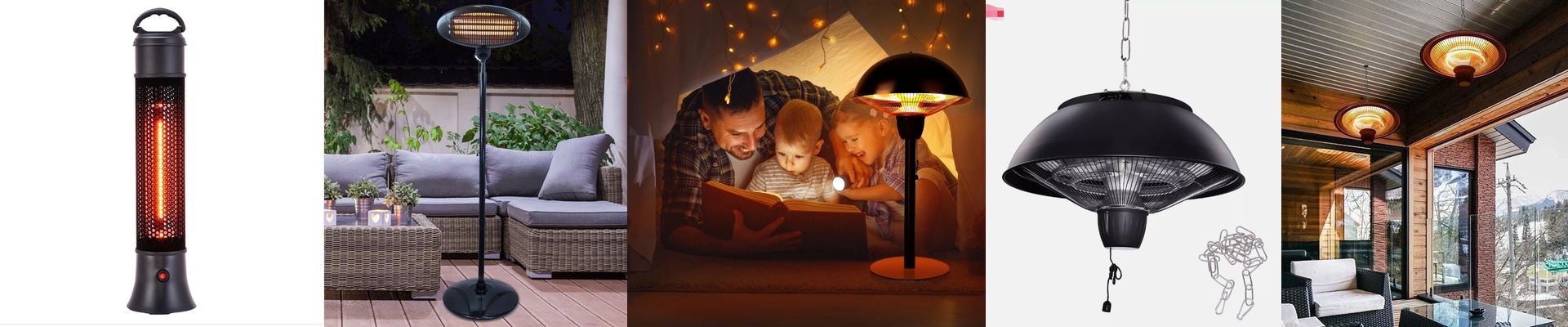
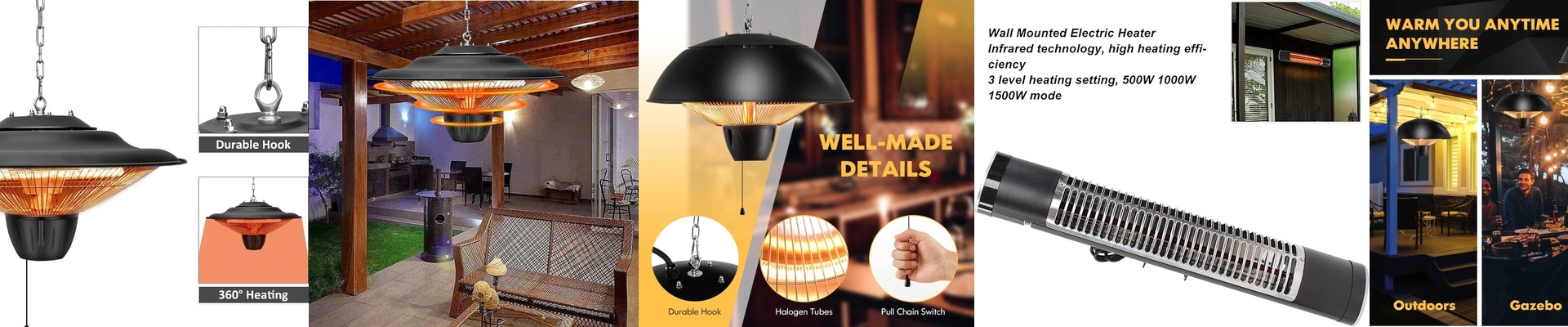



Winter hits the garage hard. Cold sneaks in through every seam, and your hands stiffen up fast. Tools feel clumsy, and the job drags. For an auto tech, that pause isn’t just uncomfortable—it costs accuracy and stretches out service time. A gazebo heater built for tough spots turns that around, throwing targeted infrared warmth right where you need it.
What matters, technically
Infrared heaters make sense in exposed areas because they warm people and objects directly, not the air. We run a high-output quartz tube element that produces short-wave infrared, so the heat travels out in a focused beam. In a garage, that means your hands and the work surface warm up within seconds—no waiting for the whole room to catch up. Many models run on 120V and plug into a standard outlet, and a built-in thermostat keeps output steady instead of swinging between too hot and too cold. On the safety side, tip-over protection shuts the unit off if it gets bumped, and a protective grill keeps accidental contact from turning into a burn.
Why this works here
This is local heating done the right way. The beam covers a defined zone around the work bay, so you stay warm while the rest of the garage stays undisturbed. With hands that stay flexible, you can feel the fine details—fasteners, gaskets, threaded holes—without forcing the work. That means quicker service cycles, fewer mistakes, and less fatigue. Because the heat is radiant, there’s no blower noise to mask what you’re listening for, and no moving air to stir dust and debris across the project.
Things to keep in mind
Infrared warmth does its best work when you aim the heater at the operator and the work area, not at a distant wall. Clearance matters—keep the unit at a safe distance from flammable materials and leave space around it for airflow. Also, infrared heats surfaces quickly, but the surrounding air can still feel chilly if the space is wide open.Pair the heater with a wind-blocking enclosure for the most consistent comfort.