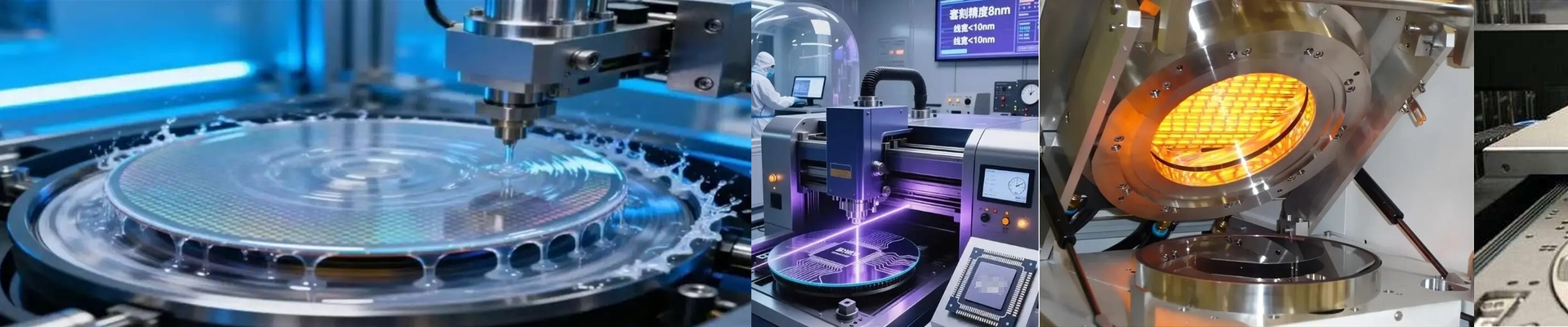

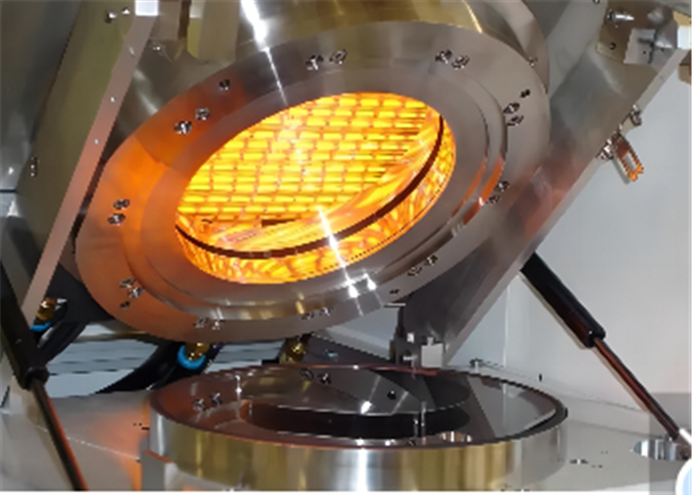
On the litho floor, you can’t afford drift. A soft bake that wanders even half a degree throws off the photoresist profile, and suddenly you’re fighting to hold CD control. Let hard bake wobble, and you’ll see edge bead, scum, or worse—adhesion loss that shows up too late to fix easily. What you need is heat that hits fast, settles exactly where you want it, and stays put, cycle after cycle. What matters under the hood We built the photoresist curing IR lamp around short-wave NIR so the resist stack heats volumetrically, quickly. Across the bake zone, wafer-level uniformity is held to ±0.1°C, and repeatability is locked down to a tight thermal budget. The system runs in Class 1–100 cleanrooms without adding particles, and it’s laid out to match the footprint, interface, and thermal profile of the major semiconductor tools you already run. We call out the output window, rise time, and hold stability because the bake step has to be a deterministic unit operation—not another variable you chase. Why it holds up in production You can measure the payoff. Soft bake and hard bake hit setpoint in seconds, so lot-to-lot warm-up drift drops and your process window tightens. Tighter temperature control means less scum, better adhesion, and fewer reworks. Power use falls because the lamp delivers heat on demand instead of idling hot. And it’s built for 24/7 operation—field data backs up long duty cycles with minimal unplanned stops. What to watch for up front Installation comes down to matching the tool’s electrical and mechanical interface, then tuning thermal setpoints to the resist chemistry and substrate stack you’re running. The lamp performs best when the bake chamber seals cleanly; any airflow disturbance will show up as local nonuniformity. Run a solid initial qualification to map the profile and lock the recipe. Once that’s done, the process runs with the kind of consistency your fab depends on.