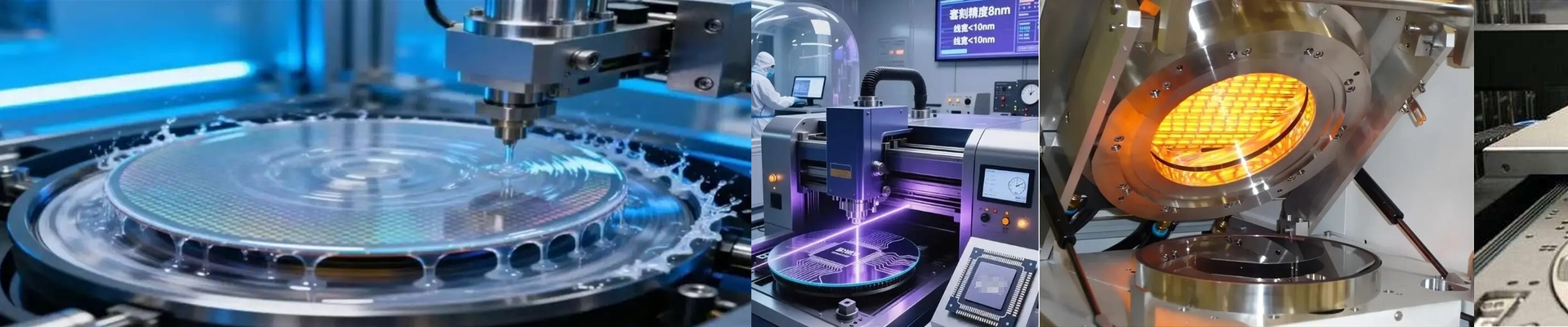

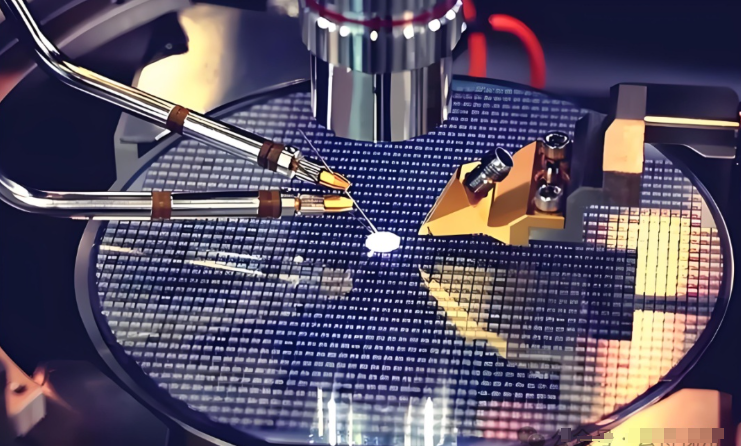
On the fab floor, a half-degree drift in soft bake is enough to throw critical dimension control and send wafers to scrap. In lithography and photoresist processing, thermal stability isn’t a “nice to have” — it is the process. We built the heating to live in 7×24 wafer flow, where every bake has to land the same way, hour after hour, no exceptions. What matters, technically Across the wafer, we hold temperature uniformity within ±0.1°C, so you don’t burn through thermal budget on advanced nodes. Short-wave infrared gives you a fast ramp with tight closed-loop control, and the hot zone is designed to generate zero particles — cleanroom compatible from Class 1 to Class 100. Repeatability is nailed down too: temperature setpoints reproduce within 0.1% cycle-to-cycle, which keeps critical dimension bias locked in. Why it works in production In day-to-day ops, that precision translates into fewer rework lots, stable yield, and cycle times you can plan around. Soft bake and hard bake hit target in seconds, with minimal overshoot — the kind of overshoot that traps solvent and shows up as pattern defects. Energy use comes down because the system heats on demand and holds steady without chasing the setpoint. Reliability shows up as uptime. The units run continuously with zero unplanned downtime, and the design life is extended so you spend less time on spares and maintenance windows. Here are the practical details The platform needs a dedicated, filtered power circuit, and you need verified coolant quality to keep thermal headroom at full duty cycle. Integration is straightforward on most wafer tracks and coat/bake tools, but the hot zone footprint has to match the chamber geometry — that’s how you get the stated uniformity. Plan the interface early. Then you can set it and run it — and run it again, the same way every time.